
Garage Door Won’t Close in Lowell, MA? Here’s What’s Most Likely Wrong and What to Check First
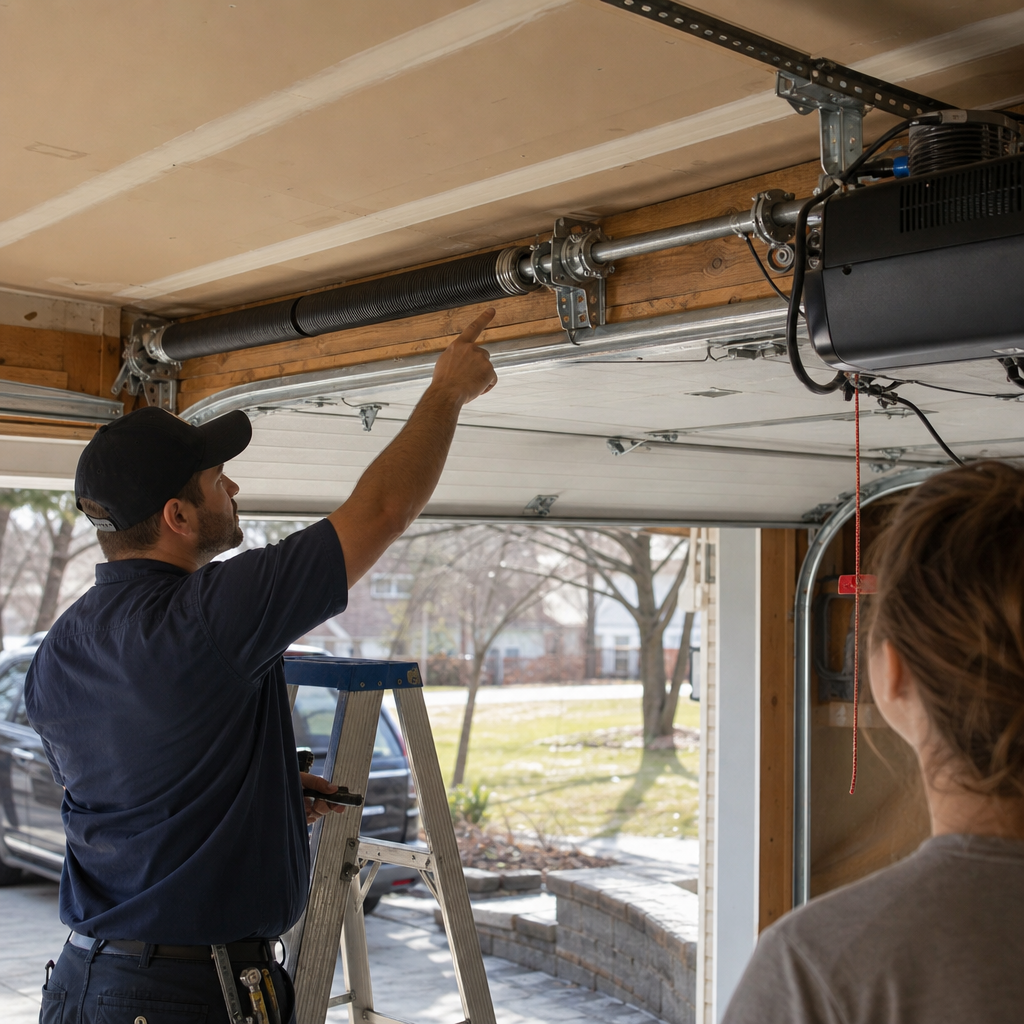
A garage door that won’t close is almost always caused by blocked or misaligned safety sensors, a physical obstruction in the door’s path, or an opener force-limit setting that’s too sensitive for winter conditions. In Lowell, where snow and freeze-thaw cycles hit harder than coastal cities, the seasonal causes stack up fast — and a door stuck open at night in the Acre or Centralville isn’t something you wait on. If you need emergency garage door repair in Lowell, MA, call Pinnacle Garage Door Installation Lowell at (866) 606-2710 — Charles Rodriguez responds to after-hours calls personally, not through a dispatch queue.

Why a Garage Door That Won’t Close in Lowell Is Different
Lowell sits in the Merrimack River valley with zero coastal temperature moderation, which means more than 50 inches of annual snow and some of the most brutal freeze-thaw cycles in Massachusetts. That geography doesn’t just make winters feel colder — it directly changes what fails on your garage door and how fast it becomes a real problem.
Here’s the local context most homeowners miss: in dense neighborhoods like the Acre and Lower Centralville, your garage is likely a small detached structure tucked behind a triple-decker, accessed through a shared alley barely 10–12 feet wide. When that door won’t close, you’re not just losing convenience. You’re leaving tools, bikes, or your vehicle exposed in a passageway shared with neighbors and foot traffic. The security exposure is immediate and genuine — which is why we treat these calls as emergencies, not next-day scheduling opportunities.
Charles Rodriguez, Owner & Lead Technician at Pinnacle Garage Door Installation Lowell, grew up in Centralville and has spent eleven years watching these exact conditions destroy hardware that would survive just fine in Boston or Cambridge. The river valley channels northwest winds that shred bottom weatherstripping and accelerate track corrosion. Frost-heaved concrete pads — common in pre-1930s housing stock — throw door alignment off by inches. And every January, we field multiple calls from homeowners who tried to force a frozen door and turned a $150 sensor cleaning into a $600 track-and-roller rebuild.
Diagnose It Now: Three Winter Causes in Order of Likelihood
Before you call, run through these three checks. They’re specific to what we see fail in Lowell from December through March, and they’ll either solve your problem or give us exactly what we need to know when you do call.
1. Snow or Ice Blocking the Photo-Eye Sensors
The two small plastic housings near floor level on either side of your door frame shoot an invisible beam across the opening. If anything breaks that beam — snow piled against the lens, ice glaze from melt-and-refreeze, even a displaced leaf from autumn — the opener assumes a child or pet is in the path and refuses to close.
What to check: Wipe both lenses with a dry cloth (not your bare hand — skin oils attract dust). Clear any snow or ice from the threshold directly between the sensors. Look for a small LED on each unit: steady green or red means alignment and clear path; blinking or dark means obstruction or misalignment. If one got bumped by a snow shovel or tire, loosen the wing nut, aim it directly at its partner, and retighten.
This single check resolves maybe 40% of winter “won’t close” calls we get in Lowell. The sensors on LiftMaster and Chamberlain openers are particularly sensitive to condensation freeze — a design trade-off for safety that works against you in river-valley humidity.
2. Bottom Weatherstrip Frozen to the Concrete Pad
Your door’s rubber bottom seal is designed to compress slightly against the floor. When meltwater seeps underneath and refreezes — guaranteed in Lowell’s freeze-thaw cycle — the seal becomes glued to the concrete. The opener’s force-limit setting detects the resistance and reverses, which is the same mechanism behind why garage doors reverse in Lowell, MA.
What to check: Look for visible ice along the threshold. If the door starts down, hesitates, then reverses with the opener light flashing, this is your culprit. Do not repeatedly hit the button — you’re straining the opener motor and risking stripped gears in the trolley carriage.
Safe temporary fix: Pour lukewarm (not boiling) water along the threshold to melt the bond, then dry thoroughly. Rock salt or calcium chloride works but corrodes aluminum door bottoms over time — we don’t recommend it. If this happens more than twice a winter, your concrete pad likely has drainage issues or the seal has hardened and needs replacement.
3. Frost-Heaved Pad Raising the Floor Into the Door’s Path
Lowell’s pre-1930 housing stock — triple-deckers, worker tenements, two-families in Back Central and the Acre — often has garage slabs poured decades after original construction, with minimal or no frost footings. Annual freeze-thaw heaves these pads upward, sometimes by half an inch or more. The door now contacts the floor before the opener expects it to, triggering the force-limit reverse.
What to check: Measure the gap between door bottom and floor when manually closed. It should be even across the width. If one side touches first, or the center bows upward, your pad has heaved. This is not a DIY fix — grinding the door bottom destroys weatherstripping contact, and shaving concrete requires knowing where utilities run. We’ve replaced doors where homeowners tried the grinder approach and created a gap that let rodents and meltwater flood in.
Charles has releveled dozens of these pads in Centralville alone. The proper fix involves either concrete grinding with dust control (messy but effective for minor heave) or pad section replacement for severe cases. Either way, it’s a same-day job when we bring the right equipment — not a “we’ll assess and reschedule” situation.
Two Sounds, Two Completely Different Problems
What you hear when the door fails tells us whether you’re looking at a $120 fix or a $340 one. Distinguishing these over the phone saves you a wasted service call and lets us bring the right parts.
| What You Observe | Most Likely Cause | Typical Lowell Repair Cost |
|---|---|---|
| Opener light blinks, motor makes no sound, door doesn’t move | Safety sensor failure, logic board issue, or wall button wiring | $120–$250 |
| Motor runs, door jerks or doesn’t move, possible loud bang | Broken torsion spring, disconnected trolley carriage, or stripped opener gear | $180–$340 |
The “light blinks, nothing moves” pattern points to the opener’s safety system or control electronics — sensors, logic board, or low-voltage wiring. These are diagnosable with a multimeter and fixed with factory-spec components. We carry replacement logic boards for LiftMaster, Chamberlain, and Genie openers on every truck, along with universal sensor kits for older Craftsman units still common in Belvidere’s mid-century homes.
The “motor runs, door doesn’t” pattern means the opener is trying but the mechanical system has failed. The most dangerous possibility is a broken torsion spring — the heavy coil above your door that does the actual lifting. A standard 16×7 steel door weighs 150–200 pounds; the spring carries that load so your ½-horsepower opener only handles 10–15 pounds of friction. When the spring snaps, the opener strains against dead weight, often stripping its nylon gear or burning out the motor.
Safety note: Never disconnect the opener and try to lift a door with a suspected broken spring. The door can slam shut with crushing force. Never adjust or replace torsion springs yourself — they’re under extreme tension and cause serious injury or death without proper winding bars and training. This is genuinely dangerous work, and we’ve seen homeowners end up in the ER attempting YouTube tutorials.
How to Secure Your Door While Waiting for Service
If it’s late, cold, and you need the door closed tonight, here’s the proper manual override process — followed by what not to do.
- Pull the red emergency release cord — the handle hanging from the opener trolley. This disengages the door from the opener drive so you can move it by hand. Pull straight down, not toward yourself, to avoid bending the release lever.
- Lift the door manually — with two people if it’s a double-wide. If the spring is intact, the door feels weight-balanced and stays at any height you leave it. If it feels heavy and wants to drop, the spring is broken — lower it gently and do not leave it unattended.
- Close the door fully and engage the manual lock — the slide bolt or keyed lock on the center track. If your door lacks one (common on older Clopay and Wayne Dalton installations in Lowell), thread a heavy-duty padlock through a hole in the track just above a roller to prevent the door from being opened from outside.
- Disconnect the opener from power at the ceiling outlet — prevents accidental re-engagement if someone hits the remote.
What not to do: Do not force a door that’s off-track or has visible cable damage. The cables on a torsion system are under residual spring tension even with a broken spring, and they can whip with enough force to lacerate. Do not prop the door closed with a board or your vehicle — wind load in Lowell’s river valley can overcome inadequate blocking. And do not leave the opener engaged with a stuck door; the thermal overload will trip, but repeated attempts fry the motor windings.
If I wouldn’t put it on my own garage, I’m not putting it on yours. That’s the standard Charles applies to every emergency call — which means if your door needs a temporary secure closure and a full fix tomorrow, he’ll tell you exactly that, not upsell an after-hours premium you don’t need.
What Repair Actually Costs in Lowell
Most “won’t close” calls in Lowell fall into the $150–$600 range depending on what’s failed. Here’s the breakdown we see on winter emergency calls:
| Repair Type | Typical Range in Lowell | When It Applies |
|---|---|---|
| Sensor realignment / cleaning | $120–$180 | Blocked or misaligned photo-eyes |
| Sensor replacement | $150–$250 | Cracked lens, failed emitter, water damage |
| Opener force-limit adjustment | $120–$180 | Seasonal sensitivity, minor pad heave |
| Trolley carriage / gear repair | $180–$320 | Stripped opener gears from forcing frozen door |
| Spring repair | $180–$340 | Broken torsion spring, spring fatigue |
| Track realignment | $120–$240 | Impact damage, pad heave, roller wear |
| Bottom seal replacement | $110–$220 | Hardened, torn, or improperly seated seal |
We don’t quote exact prices until we see the door — anyone who does is guessing or padding. What we do guarantee: Pinnacle delivers the best garage door repair in Lowell, MA because Charles brings eleven years of diagnostic experience and factory training across 8 major brands, so the fix happens once, correctly, with parts that match your system. No “universal” substitutes that fail in six months, no return trips because the technician guessed wrong.
Our Garage Door Repair page covers the full scope of what we handle — from routine maintenance to full system replacement.
Why the “Owner Is the Technician” Matters for Emergency Calls
Here’s the practical difference: when you call Pinnacle Garage Door Installation Lowell at (866) 606-2710 with a door that won’t close, you’re speaking to Charles Rodriguez directly. He asks the right questions — “Is the light blinking or is the motor running?” — because he’s the one who’ll show up with the tools and the parts. There’s no dispatcher translating your problem into a ticket, no subcontractor who “assesses” and discovers he needs a part he doesn’t carry, no third-party warranty runaround if something isn’t right.
That accountability shows in the numbers: 4.9 stars across 252 verified reviews, built one job at a time over eleven years. It’s why our emergency calls in Lowell don’t become two-day ordeals. And it’s why we’ll tell you honestly if your 1980s Genie opener has reached the point where repair money is better put toward replacement — because Charles would rather earn your trust on one call than your resentment on three.
For non-urgent scheduling or to explore new door options, our home page has full service details. For everything else — especially tonight, especially in the cold — call the number below.
FAQs
Most repairs run $150–$600 depending on whether it’s a sensor issue, opener component failure, or broken spring. A simple sensor cleaning and realignment typically falls at the low end around $120–$180, while a broken torsion spring replacement usually runs $180–$340 including parts and labor. Call (866) 606-2710 for an exact quote — estimates are free, and Charles can often diagnose over the phone whether you’re looking at a quick fix or something requiring parts.
Yes — emergency service is available, and because Charles Rodriguez responds personally rather than routing through a dispatch network, we can typically be on-site within hours for urgent calls. Same-day repair is standard for sensor issues, opener adjustments, and most spring or cable replacements since we carry inventory for LiftMaster, Chamberlain, Genie, and other major brands on every truck. Call (866) 606-2710 to confirm current availability.
Repair is usually cheaper if the opener is under 10 years old and the failure is isolated to sensors, gears, or the logic board — typically $120–$320 versus $250–$550 for new installation. However, if your opener lacks modern safety features, has repeated failures, or is a discontinued model with unavailable parts, replacement saves money long-term. Charles will assess this honestly on site; we’ve advised repair on 12-year-old units and replacement on 6-year-old units with chronic issues. Call (866) 606-2710 for a no-pressure evaluation.
Cold weather causes three specific failures: photo-eye sensors fog or ice over and break their safety beam, bottom rubber seals freeze to the concrete threshold and trigger force-limit reversal, and frost-heaved concrete pads raise the floor into the door’s closing path. Lowell’s Merrimack River valley location makes all three more common than in coastal Massachusetts cities. Seasonal maintenance in late fall — lubricating tracks, testing force settings, and inspecting seal condition — prevents most cold-weather failures. Call (866) 606-2710 to schedule preventive service before the next freeze.
Call Pinnacle Garage Door Installation Lowell
If your garage door won’t close and the checks above haven’t solved it — or if you’d rather have a trained technician handle it from the start — Pinnacle Garage Door Installation Lowell offers no-pressure assessments throughout Lowell. Charles Rodriguez, Owner & Lead Technician, brings eleven years of hands-on experience and factory training across 8 major brands to every call. For emergency response or to schedule service, call (866) 606-2710.
Written by Charles Rodriguez, Owner & Lead Technician at Pinnacle Garage Door Installation Lowell, serving Lowell, MA.